
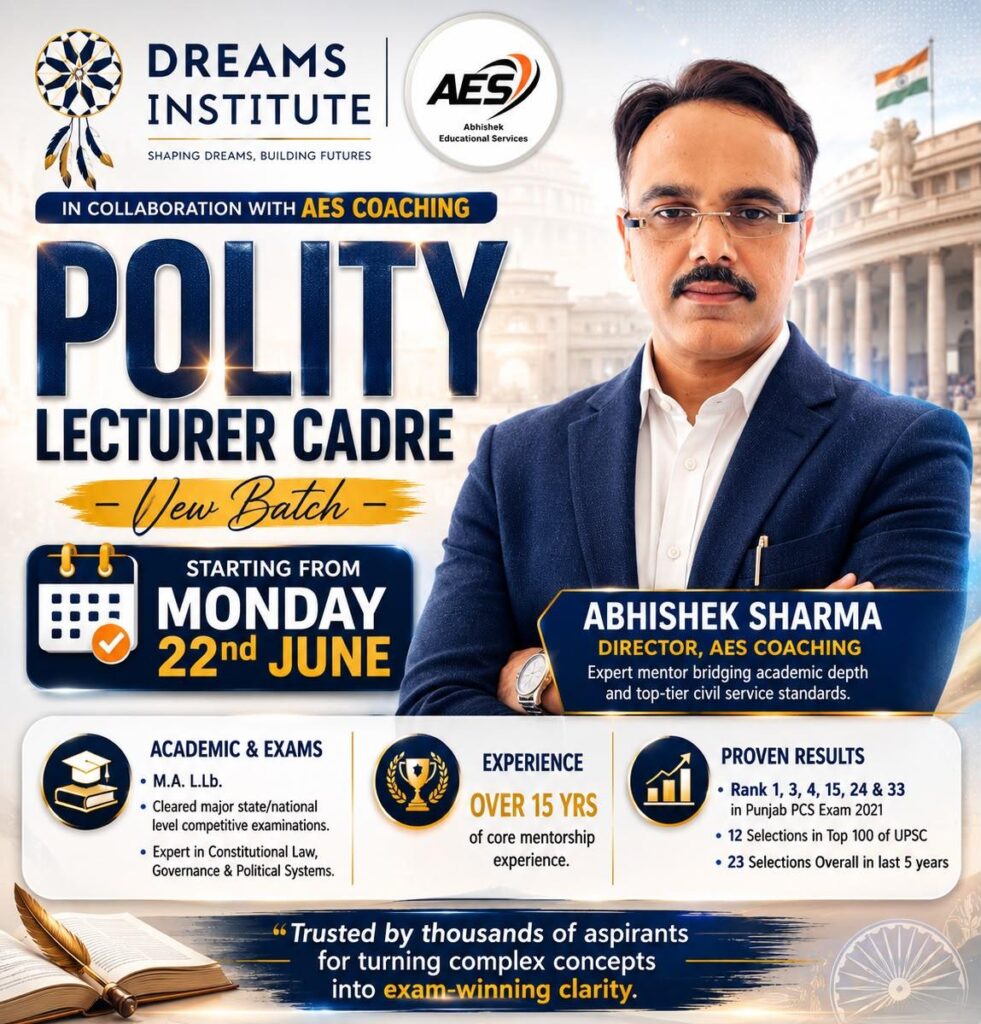
Political Science & IR Comprehensive Batch 2026
- ✨ Weekly Topic-Wise Comprehensive Tests
- 📚 Well-Drafted Analytical Notes (**English & Punjabi Medium**)
📚 Comprehensive Course Syllabus
Complete topic breakdown aligned with the official Punjab Lecturer Cadre 2026 notification
Political Theory
- Concepts: Liberty, Equality, Justice, Rights, Types of government, State & its Elements, Citizenship, Liberalism, Socialism, Marxism.
Western Political Thought
- Key Thinkers: Plato, Aristotle, Machiavelli, Hobbes, Locke, Rousseau, Hegel, John Stuart Mill, Karl Marx, Gramsci, John Rawls.
Indian Political Thought
- Key Thinkers: Kautilya, Bal Gangadhar Tilak, Swami Vivekanand, Rabindranath Tagore, M.K Gandhi, Sri Aurobindo, M.N.Rai, Dr. B.R.Ambedkar, J L Nehru.
Comparative Political Analysis
- Approaches: Political Culture, Political Socialization, Comparative Politics, Political System, Public Opinion.
- State Theory: State in capitalist and socialist societies; post-colonial state; welfare state; globalization.
- Constitutions & Constitutionalism: Forms of constitutions, rule of law, judicial independence, liberal constitutionalism; emergency powers.
- Structures of Power: Ruling class, power elites, democratic elitism.
- Electoral & Processes: Electoral Systems, Political Parties, Interest & Pressure groups, Social movements, NGOs, civil society campaigns; Revolutions.
International Relations
- Approaches: Idealism, Realism, Structural Marxism, Neoliberalism.
- Concepts: State, non-state actors, Power, Sovereignty, Security (traditional and non-traditional).
- United Nations: Aims, Objectives, Structure, Evaluation, Peace & Development, Humanitarian intervention, International law, ICC.
- Global & Regional Bodies: Globalization, WTO, G-20, BRICS, European Union, SAARC, ASEAN.
- Contemporary Challenges: International terrorism, Disarmament, Climate change, Human Rights, Migration.
India’s Foreign Policy
- Determinants: Principles, historical background and relevance of Non-Aligned Movement (NAM); India’s Nuclear Policy.
- Relations with Major Powers: USA, Russia, People’s Republic of China.
- Neighborhood Relations: Pakistan, Nepal, Sri Lanka, Bangladesh.
- Doctrines: Gujral doctrine, Look East/Act East, Look West.
Political Institutions in India
- Constitution & Philosophy: Colonial heritage, Constituent Assembly, Preamble, Fundamental Rights, Directive Principles, Fundamental Duties.
- Constitutionalism: Democracy, Social Change, Checks and Balances, Basic Structure Debate, Major Amendments.
- Union Structure: President, Prime Minister, Council of Ministers, Parliament Role & Committees.
- Judiciary: Supreme Court, High Court, Judicial Review, Activism, Reforms.
- State Level & Federalism: Governor, Chief Minister, State Legislature, Centre-State Relations, Inter-State Council.
- Elections & Local Govt: Election Commission, Rules, Electoral Reforms, Urban & Rural self-government (73rd & 74th Amendments).
- Statutory Bodies: CAG, National Commissions (SC, Human Rights, Women, Minorities).
Political Processes in India
- Regionalization: Reorganization of Indian States, Regional disparities, Demand for New States, Bureaucracy.
- Political Parties: Ideology and Social basis of National Parties and State Parties.
Governance and Public Policy in India
- Governance: Good/democratic governance, role of state, civil society, individuals.
- Accountability & Control: Parliamentary control, judicial/administrative control, corruption, administrative reforms.
- Institutional Mechanisms: Right to Information (RTI), Lokpal, Lokayukta.
- Planning: Decentralized, sustainable, and participatory development; e-governance; NITI Aayog.
- Public Policy: Policies referring to housing, health, drinking water, food security, MNREGA, NHRM, RTE.
Punjab Politics
- Historical Movements: Punjabi Suba movement, Sarkaria commission, Anandpur Sahib resolution, Rajiv-Longowal Accord.
- Contemporary Politics: Emerging trends in Punjab politics with special reference to Congress, BJP, AAP, BSP & Shiromani Akali Dal till date.
1,013
Total Group B Vacancies
12
Subjects Available
₹34,500
Monthly Base Pay
Active
Application Portal Link
Visual Breakout: Vacancy Distribution
*Top 6 subjects making up the bulk of the 1,013 total seats.
Subject-Wise Vacancy Breakup
Candidates can review the exact number of allocated seats across all 12 domains below:
| Subject Domain | Total Posts Allocated | Action |
|---|---|---|
| History | 210 | High Volume |
| English | 141 | High Volume |
| Political Science | 131 | High Volume |
| Mathematics | 105 | Medium |
| Punjabi | 99 | Medium |
| Commerce | 98 | Medium |
| Physics | 58 | Standard |
| Economics | 50 | Standard |
| Chemistry | 41 | Standard |
| Biology | 37 | Standard |
| Hindi | 29 | Standard |
| Geography | 14 | Standard |

Abhishek Sharma
Director, AES Coaching
Expert Mentorship & Academic Leadership
An expert who bridges the gap between academic depth and top-tier civil service standards, ensuring aspirants decode advanced constitutional mandates and structural state policies into lucid, exam-oriented frameworks.
🎓 Academic Achievements
- Qualifications: M.A., L.Lb.
- Proven Expertise: Successfully cleared major state and national level competitive examinations, demonstrating profound mastery over structural law, governance, and political systems.
- Domain Authority: An acclaimed academic authority across major civil service verticals (UPSC / Punjab PCS / Haryana HCS).
🏆 Teaching Experience & Results
- 15+ Years Experience: Core mentorship experience guiding aspirants through complex administrative and conceptual subjects.
- Stellar Ranks (Punjab PCS 2021): Produced Top Ranks including 1 3 4 15 24 and 33.
- Consistent Selections: 12 selections in the top 100 of the UPSC and 23 selections overall in the last 5 years.
- Trusted by Thousands: A proven track record of transforming dedicated students into top-tier civil servants.
DEMO VIDEOS
SAMPLE NOTES ON SELECT TOPICS
ਪਲੈਟੋ (Plato)
1. ਜਾਣ-ਪਛਾਣ (Introduction)
ਪਲੈਟੋ (ਲਗਭਗ 428/427 BC – 348/347 BC) ਪ੍ਰਾਚੀਨ ਯੂਨਾਨ ਦੇ ਕਲਾਸੀਕਲ ਦੌਰ ਦਾ ਇੱਕ ਮਹਾਨ ਏਥਨੀਅਨ ਦਾਰਸ਼ਨਿਕ ਸੀ, ਜਿਸਨੂੰ ਪੱਛਮੀ ਰਾਜਨੀਤਿਕ ਚਿੰਤਨ ਅਤੇ ਦਰਸ਼ਨ ਦਾ ਪਿਤਾਮਾ ਮੰਨਿਆ ਜਾਂਦਾ ਹੈ। ਉਸਦੇ ਜੀਵਨ ਦੇ ਪ੍ਰਮੁੱਖ ਤੱਥ ਹੇਠ ਲਿਖੇ ਹਨ:
- ਪਿਛੋਕੜ ਅਤੇ ਅਸਲ ਨਾਮ: ਪਲੈਟੋ ਦਾ ਜਨਮ ਏਥਨਜ਼ ਦੇ ਇੱਕ ਉੱਚ-ਘਰਾਣੇ (Aristocratic family) ਵਿੱਚ ਹੋਇਆ। ਉਸਦੇ ਪਿਤਾ ਦਾ ਨਾਮ ‘ਅਰਿਸਟਨ’ (Ariston) ਅਤੇ ਮਾਤਾ ਦਾ ਨਾਮ ‘ਪੇਰੀਕਟੀਓਨ’ (Perictione) ਸੀ। ਪਲੈਟੋ ਦਾ ਅਸਲੀ ਨਾਮ ਅਰਿਸਟੋਕਲੀਜ਼ (Aristocles) ਸੀ। ਉਸਦੇ ਕੁਸ਼ਤੀ ਦੇ ਕੋਚ ਨੇ ਉਸਦੇ ਚੌੜੇ ਮੋਢਿਆਂ ਅਤੇ ਮਜ਼ਬੂਤ ਸਰੀਰ ਕਾਰਨ ਉਸਨੂੰ “ਪਲੈਟੋ” (ਭਾਵ ਚੌੜਾ/Broad) ਨਾਮ ਦਿੱਤਾ।
- ਸੁਕਰਾਤ ਦਾ ਪ੍ਰਭਾਵ: ਪਲੈਟੋ ਸੁਕਰਾਤ ਦਾ ਸਭ ਤੋਂ ਨਜ਼ਦੀਕੀ ਚੇਲਾ ਸੀ। 399 ਬੀ.ਸੀ. ਵਿੱਚ ਏਥਨਜ਼ ਦੇ ਲੋਕਤੰਤਰ ਦੁਆਰਾ ਸੁਕਰਾਤ ਨੂੰ ਜ਼ਹਿਰ (Hemlock) ਦੇ ਕੇ ਮੌਤ ਦੀ ਸਜ਼ਾ ਦਿੱਤੀ ਗਈ। ਇਸ ਘਟਨਾ ਨੇ ਪਲੈਟੋ ਨੂੰ ਸਰਗਰਮ ਰਾਜਨੀਤੀ ਤੋਂ ਨਫ਼ਰਤ ਕਰਨ ਲਾ ਦਿੱਤਾ ਅਤੇ ਉਹ ਦਰਸ਼ਨ ਵੱਲ ਮੁੜ ਗਿਆ।
- ਸਫ਼ਰ ਅਤੇ ਅਕੈਡਮੀ ਦੀ ਸਥਾਪਨਾ: ਸੁਕਰਾਤ ਦੀ ਮੌਤ ਤੋਂ ਬਾਅਦ ਪਲੈਟੋ ਨੇ ਇਟਲੀ, ਸਿਸਲੀ (ਸਾਇਰਾਕਿਊਜ਼), ਅਤੇ ਮਿਸਰ ਦੀ ਯਾਤਰਾ ਕੀਤੀ। ਇਟਲੀ ਵਿੱਚ ਉਹ ਪਾਇਥਾਗੋਰਸ ਦੇ ਵਿਚਾਰਾਂ ਤੋਂ ਪ੍ਰਭਾਵਿਤ ਹੋਇਆ। ਲਗਭਗ 387 ਬੀ.ਸੀ. ਵਿੱਚ ਉਸਨੇ ਏਥਨਜ਼ ਵਿੱਚ ‘ਦ ਅਕੈਡਮੀ’ (The Academy) ਦੀ ਸਥਾਪਨਾ ਕੀਤੀ, ਜਿਸਨੂੰ ਪੱਛਮੀ ਦੁਨੀਆ ਦੀ ਪਹਿਲੀ ਉੱਚ-ਸਿੱਖਿਆ ਸੰਸਥਾ (University) ਮੰਨਿਆ ਜਾਂਦਾ ਹੈ। ਇਸਦੇ ਮੁੱਖ ਦੁਆਰ ‘ਤੇ ਲਿਖਿਆ ਸੀ: “ਜਿਸਨੂੰ ਜਿਓਮੈਟਰੀ (ਰੇਖਾਗਣਿਤ) ਦਾ ਗਿਆਨ ਨਹੀਂ, ਉਹ ਇੱਥੇ ਪ੍ਰਵੇਸ਼ ਨਾ ਕਰੇ।”
- ਲਿਖਤਾਂ (Dialogues): ਪਲੈਟੋ ਨੇ ਆਪਣੀਆਂ ਰਚਨਾਵਾਂ ‘ਸੰਵਾਦ’ (Dialogues) ਦੇ ਰੂਪ ਵਿੱਚ ਲਿਖੀਆਂ। ਉਸਦੀਆਂ 35 ਲਿਖਤਾਂ ਮਿਲਦੀਆਂ ਹਨ, ਜਿਨ੍ਹਾਂ ਵਿੱਚੋਂ ਜ਼ਿਆਦਾਤਰ ਵਿੱਚ ‘ਸੁਕਰਾਤ’ ਨੂੰ ਮੁੱਖ ਪਾਤਰ ਬਣਾ ਕੇ ਵਿਚਾਰ ਪੇਸ਼ ਕੀਤੇ ਗਏ ਹਨ। ਮੁੱਖ ਰਚਨਾਵਾਂ ਹਨ: The Republic, The Statesman, The Laws, Symposium, Apology, Phaedo.
2. ਵਿਸ਼ਲੇਸ਼ਣ (Analysis)
ਪਲੈਟੋ ਦਾ ਰਾਜਨੀਤਿਕ ਅਤੇ ਦਾਰਸ਼ਨਿਕ ਚਿੰਤਨ ਬਹੁਤ ਵਿਸ਼ਾਲ ਹੈ। ਉਸਦੇ ਮੁੱਖ ਸਿਧਾਂਤ ਇਸ ਪ੍ਰਕਾਰ ਹਨ:
- ਵਿਚਾਰਾਂ ਦਾ ਸਿਧਾਂਤ (Theory of Forms/Ideas): ਪਲੈਟੋ ਦਾ ਮੰਨਣਾ ਸੀ ਕਿ ਜੋ ਭੌਤਿਕ ਦੁਨੀਆ ਅਸੀਂ ਦੇਖਦੇ ਹਾਂ ਉਹ ਬਦਲਣਸ਼ੀਲ ਅਤੇ ਨਾਸ਼ਵਾਨ ਹੈ; ਇਹ ਸਿਰਫ਼ ‘ਅਸਲੀਅਤ ਦਾ ਪਰਛਾਵਾਂ’ ਹੈ। ਅਸਲੀ ਦੁਨੀਆ ‘ਵਿਚਾਰਾਂ/ਰੂਪਾਂ ਦੀ ਦੁਨੀਆ’ (Realm of Forms) ਹੈ ਜੋ ਅਦਿੱਖ, ਸਦੀਵੀ ਅਤੇ ਸੰਪੂਰਨ ਹੈ।
- ਗੁਫਾ ਦਾ ਦ੍ਰਿਸ਼ਟਾਂਤ (Allegory of the Cave): The Republic ਦੀ ਕਿਤਾਬ VII ਵਿੱਚ, ਪਲੈਟੋ ਸਮਾਜ ਦੇ ਅਗਿਆਨਤਾ ਨੂੰ ਦਰਸਾਉਣ ਲਈ ਇੱਕ ਗੁਫਾ ਦੀ ਉਦਾਹਰਣ ਦਿੰਦਾ ਹੈ। ਲੋਕ ਗੁਫਾ ਵਿੱਚ ਬੱਝੇ ਹੋਏ ਹਨ ਅਤੇ ਕੰਧ ‘ਤੇ ਪੈ ਰਹੇ ਪਰਛਾਵਿਆਂ ਨੂੰ ਅਸਲੀਅਤ ਮੰਨਦੇ ਹਨ। ਦਾਰਸ਼ਨਿਕ ਉਹ ਹੈ ਜੋ ਗੁਫਾ ਤੋਂ ਬਾਹਰ ਆ ਕੇ ‘ਸੂਰਜ’ (Form of the Good – ਪਰਮ ਸੱਚ) ਨੂੰ ਦੇਖਦਾ ਹੈ ਅਤੇ ਵਾਪਸ ਆ ਕੇ ਲੋਕਾਂ ਨੂੰ ਅਗਿਆਨਤਾ ਤੋਂ ਕੱਢਣ ਦੀ ਕੋਸ਼ਿਸ਼ ਕਰਦਾ ਹੈ।
- ਆਤਮਾ ਦਾ ਤਿਕੋਣਾ ਸਿਧਾਂਤ (Tripartite Theory of Soul) ਅਤੇ ਰੱਥ ਦਾ ਦ੍ਰਿਸ਼ਟਾਂਤ (Chariot Allegory):ਪਲੈਟੋ ਅਨੁਸਾਰ ਮਨੁੱਖੀ ਆਤਮਾ ਦੇ ਤਿੰਨ ਹਿੱਸੇ ਹੁੰਦੇ ਹਨ:
- ਬੁੱਧੀ (Reason/Logistikon): ਦਿਮਾਗ ਵਿੱਚ ਰਹਿੰਦੀ ਹੈ, ਗੁਣ ‘ਸਿਆਣਪ’ (Wisdom) ਹੈ।
- ਜਜ਼ਬਾ/ਹੌਂਸਲਾ (Spirit/Thumoeides): ਦਿਲ ਵਿੱਚ ਰਹਿੰਦਾ ਹੈ, ਗੁਣ ‘ਦਲੇਰੀ’ (Courage) ਹੈ।
- ਇੱਛਾ/ਭੁੱਖ (Appetite/Epithumetikon): ਢਿੱਡ ਵਿੱਚ ਰਹਿੰਦੀ ਹੈ, ਗੁਣ ‘ਸੰਜਮ’ (Temperance) ਹੈ।Phaedrus ਨਾਮਕ ਰਚਨਾ ਵਿੱਚ ਉਹ ਆਤਮਾ ਦੀ ਤੁਲਨਾ ਇੱਕ ਰੱਥ ਨਾਲ ਕਰਦਾ ਹੈ ਜਿਸਨੂੰ ਇੱਕ ਸਾਰਥੀ (ਬੁੱਧੀ) ਚਲਾਉਂਦਾ ਹੈ ਅਤੇ ਦੋ ਘੋੜੇ (ਹੌਂਸਲਾ ਅਤੇ ਇੱਛਾ) ਉਸਨੂੰ ਖਿੱਚਦੇ ਹਨ।
- ਆਦਰਸ਼ ਰਾਜ ਅਤੇ ਧਾਤਾਂ ਦੀ ਕਥਾ (Myth of Metals/Noble Lie): ਆਤਮਾ ਦੇ ਉਪਰੋਕਤ ਤਿੰਨ ਗੁਣਾਂ ਦੇ ਅਧਾਰ ‘ਤੇ ਹੀ ਸਮਾਜ ਨੂੰ ਤਿੰਨ ਵਰਗਾਂ ਵਿੱਚ ਵੰਡਿਆ ਗਿਆ ਹੈ:
- ਦਾਰਸ਼ਨਿਕ ਰਾਜੇ (Philosopher Kings): ਜਿਨ੍ਹਾਂ ਵਿੱਚ ਬੁੱਧੀ ਪ੍ਰਧਾਨ ਹੈ (ਸੋਨੇ ਦੀ ਧਾਤ)।
- ਸੈਨਿਕ (Auxiliaries/Soldiers): ਜਿਨ੍ਹਾਂ ਵਿੱਚ ਹੌਂਸਲਾ ਪ੍ਰਧਾਨ ਹੈ (ਚਾਂਦੀ ਦੀ ਧਾਤ)।
- ਉਤਪਾਦਕ (Producers): ਜਿਨ੍ਹਾਂ ਵਿੱਚ ਭੁੱਖ ਪ੍ਰਧਾਨ ਹੈ (ਕਾਂਸੀ/ਲੋਹੇ ਦੀ ਧਾਤ)।ਪਲੈਟੋ ਨੇ ਸਮਾਜ ਵਿੱਚ ਅਨੁਸ਼ਾਸਨ ਬਣਾਈ ਰੱਖਣ ਲਈ ਇਸ ‘ਧਾਤਾਂ ਦੀ ਕਥਾ’ ਨੂੰ ਇੱਕ ‘ਪਵਿੱਤਰ ਝੂਠ’ (Noble Lie) ਵਜੋਂ ਵਰਤਣ ਦੀ ਗੱਲ ਕੀਤੀ ਹੈ।
- ਨਿਆਂ ਦਾ ਸਿਧਾਂਤ (Theory of Justice): ਪਲੈਟੋ ਅਨੁਸਾਰ ਨਿਆਂ ਦਾ ਅਰਥ ਅਦਾਲਤੀ ਕਾਰਵਾਈ ਨਹੀਂ, ਸਗੋਂ “ਆਪਣੇ ਸੁਭਾਅ ਅਨੁਸਾਰ ਆਪਣਾ ਨਿਰਧਾਰਿਤ ਕੰਮ ਕਰਨਾ ਅਤੇ ਦੂਜਿਆਂ ਦੇ ਕੰਮ ਵਿੱਚ ਦਖਲ ਨਾ ਦੇਣਾ” ਹੈ। ਉਹ ਕਹਿੰਦਾ ਹੈ: “ਰਾਜ ਵਿਅਕਤੀ ਦਾ ਹੀ ਵਿਸ਼ਾਲ ਰੂਪ ਹੈ” (State is individual writ large).
- ਸਾਮਵਾਦ (Communism) ਅਤੇ ਸਿੱਖਿਆ (Education):
- ਪਲੈਟੋ ‘ਸਰਪ੍ਰਸਤ ਵਰਗ’ (Guardians – ਸ਼ਾਸਕ ਅਤੇ ਸੈਨਿਕ) ਲਈ ਨਿੱਜੀ ਸੰਪਤੀ ਅਤੇ ਪਰਿਵਾਰ ਦੇ ਖਾਤਮੇ (Communism of property and wives) ਦੀ ਗੱਲ ਕਰਦਾ ਹੈ, ਤਾਂ ਜੋ ਉਹ ਭ੍ਰਿਸ਼ਟਾਚਾਰ ਅਤੇ ਪਰਿਵਾਰਕ ਮੋਹ ਤੋਂ ਬਚ ਸਕਣ। ਰਾਜ ਹੀ ਬੱਚਿਆਂ ਦਾ ਪਾਲਣ-ਪੋਸ਼ਣ ਕਰੇਗਾ (Eugenics ਦਾ ਸਮਰਥਨ)।
- ਪਲੈਟੋ ਦੀ ਸਿੱਖਿਆ ਪ੍ਰਣਾਲੀ ਰਾਜ ਦੁਆਰਾ ਨਿਯੰਤਰਿਤ ਹੈ। ਇਸ ਵਿੱਚ ਔਰਤਾਂ ਅਤੇ ਮਰਦਾਂ ਲਈ ਬਰਾਬਰ ਸਿੱਖਿਆ ਦੀ ਵਕਾਲਤ ਕੀਤੀ ਗਈ ਹੈ (ਇਸੇ ਲਈ ਉਸਨੂੰ ਪਹਿਲਾ ਨਾਰੀਵਾਦੀ/First Feminist ਵੀ ਕਿਹਾ ਜਾਂਦਾ ਹੈ)। ਇਹ ਪ੍ਰਕਿਰਿਆ 50 ਸਾਲ ਦੀ ਉਮਰ ਤੱਕ ਚੱਲਦੀ ਹੈ ਜਦੋਂ ਜਾ ਕੇ ਇੱਕ ਦਾਰਸ਼ਨਿਕ ਰਾਜਾ ਤਿਆਰ ਹੁੰਦਾ ਹੈ।
3. ਸੰਵਿਧਾਨਕ ਪਹਿਲੂ (Constitutional Aspect)
ਪਲੈਟੋ ਦੇ ਸੰਵਿਧਾਨਕ ਅਤੇ ਕਾਨੂੰਨੀ ਵਿਚਾਰਾਂ ਦਾ ਵਿਕਾਸ ਉਸਦੀਆਂ ਤਿੰਨ ਵੱਡੀਆਂ ਲਿਖਤਾਂ ਵਿੱਚ ਸਾਫ਼ ਦਿਖਾਈ ਦਿੰਦਾ ਹੈ। ਵਿਕੀਪੀਡੀਆ ਦੀ ਜਾਣਕਾਰੀ ਅਨੁਸਾਰ ਸਰਕਾਰਾਂ ਬਾਰੇ ਉਸਦਾ ਵਰਗੀਕਰਨ ਬਹੁਤ ਡੂੰਘਾ ਹੈ:
- 1. ‘ਦਿ ਰਿਪਬਲਿਕ’ (The Republic) – ਆਦਰਸ਼ਵਾਦ:ਇਸ ਵਿੱਚ ਉਹ ‘ਦਾਰਸ਼ਨਿਕ ਰਾਜੇ’ ਦੇ ਅਸੀਮਤ ਸ਼ਾਸਨ ਦੀ ਵਕਾਲਤ ਕਰਦਾ ਹੈ। ਪਲੈਟੋ ‘ਕਾਨੂੰਨ ਦੇ ਸ਼ਾਸਨ’ (Rule of Law) ਨੂੰ ਪੂਰੀ ਤਰ੍ਹਾਂ ਰੱਦ ਕਰਦਾ ਹੈ। ਉਸਦਾ ਤਰਕ ਹੈ ਕਿ ਕਾਨੂੰਨ ਅੰਨ੍ਹੇ ਅਤੇ ਕਠੋਰ ਹੁੰਦੇ ਹਨ, ਜਦਕਿ ਇੱਕ ਸੱਚੇ ਗਿਆਨੀ ਰਾਜੇ ਦੀ ਸਿਆਣਪ ਕਿਸੇ ਵੀ ਲਿਖਤੀ ਕਾਨੂੰਨ ਨਾਲੋਂ ਉੱਤਮ ਹੈ।
- ਸਰਕਾਰਾਂ ਦਾ ਪਤਨ (Five Regimes): ਦਿ ਰਿਪਬਲਿਕ (ਕਿਤਾਬ VIII) ਵਿੱਚ ਪਲੈਟੋ ਸੰਵਿਧਾਨਾਂ/ਸਰਕਾਰਾਂ ਦੇ ਪਤਨ ਦਾ ਕ੍ਰਮਵਾਰ ਚੱਕਰ ਦੱਸਦਾ ਹੈ:
- Aristocracy (ਕੁਲੀਨਤੰਤਰ): ਸਭ ਤੋਂ ਉੱਤਮ, ਦਾਰਸ਼ਨਿਕਾਂ ਦਾ ਸ਼ਾਸਨ।
- Timocracy (ਸਨਮਾਨ-ਤੰਤਰ): ਜਦੋਂ ਸੈਨਿਕ ਤਾਕਤ ਅਤੇ ਸਨਮਾਨ ਦੀ ਭੁੱਖ ਵਧਦੀ ਹੈ (ਜਿਵੇਂ ਸਪਾਰਟਾ)।
- Oligarchy (ਧਨਿਕਤੰਤਰ): ਜਦੋਂ ਸਮਾਜ ਵਿੱਚ ਪੈਸੇ ਦਾ ਬੋਲਬਾਲਾ ਹੁੰਦਾ ਹੈ।
- Democracy (ਲੋਕਤੰਤਰ): ਜਦੋਂ ਗਰੀਬ ਬਗਾਵਤ ਕਰਦੇ ਹਨ; ਪਲੈਟੋ ਇਸਨੂੰ ਭੀੜ ਦਾ ਸ਼ਾਸਨ ਅਤੇ ‘ਅਤਿ ਦੀ ਸੁਤੰਤਰਤਾ’ ਕਹਿੰਦਾ ਹੈ, ਜਿੱਥੇ ਕੋਈ ਅਨੁਸ਼ਾਸਨ ਨਹੀਂ ਹੁੰਦਾ।
- Tyranny (ਤਾਨਾਸ਼ਾਹੀ): ਲੋਕਤੰਤਰ ਦੀ ਹਫੜਾ-ਦਫੜੀ ਵਿੱਚੋਂ ਇੱਕ ਤਾਨਾਸ਼ਾਹ ਪੈਦਾ ਹੁੰਦਾ ਹੈ, ਜੋ ਸਭ ਤੋਂ ਮਾੜਾ ਸ਼ਾਸਨ ਹੈ।
- ਸਰਕਾਰਾਂ ਦਾ ਪਤਨ (Five Regimes): ਦਿ ਰਿਪਬਲਿਕ (ਕਿਤਾਬ VIII) ਵਿੱਚ ਪਲੈਟੋ ਸੰਵਿਧਾਨਾਂ/ਸਰਕਾਰਾਂ ਦੇ ਪਤਨ ਦਾ ਕ੍ਰਮਵਾਰ ਚੱਕਰ ਦੱਸਦਾ ਹੈ:
- 2. ‘ਦਿ ਸਟੇਟਸਮੈਨ’ (The Statesman) – ਪਰਿਵਰਤਨਕਾਲ:ਇਸ ਕਿਤਾਬ ਵਿੱਚ ਪਲੈਟੋ ਯਥਾਰਥ ਵੱਲ ਮੁੜਦਾ ਹੈ। ਉਹ ਮੰਨਦਾ ਹੈ ਕਿ ਸੰਪੂਰਨ ਦਾਰਸ਼ਨਿਕ ਰਾਜਾ ਮਿਲਣਾ ਲਗਭਗ ਅਸੰਭਵ ਹੈ। ਉਹ ਸ਼ਾਸਕ ਦੀ ਤੁਲਨਾ ਇੱਕ ਜੁਲਾਹੇ (Weaver), ਜਹਾਜ਼ ਦੇ ਕਪਤਾਨ, ਜਾਂ ਡਾਕਟਰ ਨਾਲ ਕਰਦਾ ਹੈ। ਇੱਥੇ ਉਹ ਪਹਿਲੀ ਵਾਰ ਕਾਨੂੰਨ ਦੀ ਮਹੱਤਤਾ ਨੂੰ ਥੋੜ੍ਹਾ ਸਵੀਕਾਰ ਕਰਦਾ ਹੈ ਕਿ ਆਦਰਸ਼ ਰਾਜੇ ਦੀ ਅਣਹੋਂਦ ਵਿੱਚ, ਕਾਨੂੰਨ ਦੁਆਰਾ ਬੰਨ੍ਹਿਆ ਸੰਵਿਧਾਨ ‘ਦੂਜਾ ਸਭ ਤੋਂ ਵਧੀਆ’ (Second best) ਬਦਲ ਹੈ।
- 3. ‘ਦਿ ਲਾਅਜ਼’ (The Laws) – ਕਾਨੂੰਨ ਦਾ ਸ਼ਾਸਨ ਅਤੇ ਉਪ-ਆਦਰਸ਼ ਰਾਜ:ਇਹ ਪਲੈਟੋ ਦੀ ਸਭ ਤੋਂ ਲੰਬੀ ਅਤੇ ਆਖਰੀ ਕਿਤਾਬ ਹੈ। ਇਸ ਵਿੱਚ ਸੁਕਰਾਤ ਪਾਤਰ ਨਹੀਂ ਹੈ (ਇੱਕ ਅਣਜਾਣ ਏਥਨੀਅਨ ਬੋਲਦਾ ਹੈ)।
- ਮੈਗਨੀਸ਼ੀਆ (Magnesia): ਪਲੈਟੋ ਕਰੀਟ ਟਾਪੂ ਉੱਤੇ ‘ਮੈਗਨੀਸ਼ੀਆ’ ਨਾਮਕ ਇੱਕ ਨਵੀਂ ਕਾਲੋਨੀ ਦੀ ਕਲਪਨਾ ਕਰਦਾ ਹੈ, ਜਿਸਦੀ ਕੁੱਲ ਆਬਾਦੀ 5,040 ਨਾਗਰਿਕ ਤੈਅ ਕੀਤੀ ਗਈ ਹੈ (ਇਹ ਨੰਬਰ ਇਸ ਲਈ ਚੁਣਿਆ ਗਿਆ ਕਿਉਂਕਿ ਇਹ 1 ਤੋਂ 12 ਤੱਕ ਲਗਭਗ ਹਰ ਅੰਕ ਨਾਲ ਵੰਡਿਆ ਜਾ ਸਕਦਾ ਹੈ)।
- ਮਿਸ਼ਰਿਤ ਸੰਵਿਧਾਨ (Mixed Constitution): ਪਲੈਟੋ ਇੱਥੇ ਇੱਕ ਅਜਿਹੇ ਸੰਵਿਧਾਨ ਦੀ ਵਕਾਲਤ ਕਰਦਾ ਹੈ ਜੋ ਫਾਰਸ (Persia) ਦੀ ਰਾਜਸ਼ਾਹੀ ਦੀ ਸਿਆਣਪ ਅਤੇ ਏਥਨਜ਼ (Athens) ਦੇ ਲੋਕਤੰਤਰ ਦੀ ਆਜ਼ਾਦੀ ਦਾ ਸੰਤੁਲਿਤ ਮਿਸ਼ਰਣ ਹੋਵੇ।
- ਕਾਨੂੰਨ ਦਾ ਸ਼ਾਸਨ (Rule of Law): ਇੱਥੇ ਉਹ ਪੂਰੀ ਤਰ੍ਹਾਂ ਮੰਨ ਲੈਂਦਾ ਹੈ ਕਿ ਕਾਨੂੰਨ ਸਰਵਉੱਚ ਹੈ ਅਤੇ ਸ਼ਾਸਕ ਵੀ ਕਾਨੂੰਨ ਦੇ ਅਧੀਨ ਹਨ।
- ਨਾਈਟ ਕੌਂਸਲ (Nocturnal Council): ਸੰਵਿਧਾਨ ਅਤੇ ਕਾਨੂੰਨਾਂ ਦੀ ਰਾਖੀ ਲਈ ਉਹ ਇੱਕ ‘ਰਾਤ ਦੀ ਸਭਾ’ ਦੀ ਸਥਾਪਨਾ ਦਾ ਸੁਝਾਅ ਦਿੰਦਾ ਹੈ ਜੋ ਬਜ਼ੁਰਗ ਅਤੇ ਸਿਆਣੇ ਲੋਕਾਂ ਦੀ ਬਣੀ ਹੋਵੇਗੀ।
4. MCQ ਲਈ ਮੁੱਢਲੇ ਤੱਥ (Prelims Facts for MCQ)
- ਪਲੈਟੋ ਦਾ ਅਸਲੀ ਨਾਮ: ਅਰਿਸਟੋਕਲੀਜ਼ (Aristocles)।
- ਜਨਮ/ਮੌਤ: 428/427 BC – 348/347 BC (ਏਥਨਜ਼)।
- ਸੰਸਥਾ: ਦ ਅਕੈਡਮੀ (The Academy) – 387 BC ਵਿੱਚ ਸਥਾਪਿਤ। (ਨੋਟ: ਅਕੈਡਮੀ ਨੂੰ 529 AD ਵਿੱਚ ਬਿਜ਼ੰਤੀਨੀ ਸਮਰਾਟ ਜਸਟੀਨੀਅਨ ਪਹਿਲੇ ਦੁਆਰਾ ਬੰਦ ਕਰ ਦਿੱਤਾ ਗਿਆ ਸੀ)।
- ਮੁੱਖ ਰਚਨਾਵਾਂ: The Republic (ਉਪ-ਸਿਰਲੇਖ: Concerning Justice), The Statesman, The Laws, Symposium (ਪਿਆਰ ਬਾਰੇ), Apology (ਸੁਕਰਾਤ ਦੀ ਅਦਾਲਤੀ ਪੇਸ਼ੀ ਬਾਰੇ)।
- ਕਾਰਲ ਪੋਪਰ ਦਾ ਵਿਰੋਧ: 1945 ਵਿੱਚ ਕਾਰਲ ਪੋਪਰ ਨੇ ਆਪਣੀ ਕਿਤਾਬ ‘The Open Society and Its Enemies’ ਵਿੱਚ ਪਲੈਟੋ ਨੂੰ “ਪਹਿਲਾ ਫਾਸ਼ੀਵਾਦੀ” (First Fascist) ਅਤੇ “ਖੁੱਲ੍ਹੇ ਸਮਾਜ ਦਾ ਦੁਸ਼ਮਣ” ਕਿਹਾ ਹੈ।
- ਪਹਿਲਾ ਨਾਰੀਵਾਦੀ: ਕਿਉਂਕਿ ਉਸਨੇ ਔਰਤਾਂ ਨੂੰ ਸਰਪ੍ਰਸਤ (Guardian) ਬਣਨ ਅਤੇ ਰਾਜ ਕਰਨ ਦੇ ਯੋਗ ਮੰਨਿਆ।
- ਐਮਰਸਨ (Emerson) ਦਾ ਕਥਨ: “ਪਲੈਟੋ ਹੀ ਦਰਸ਼ਨ ਹੈ, ਅਤੇ ਦਰਸ਼ਨ ਹੀ ਪਲੈਟੋ ਹੈ।” (Plato is philosophy, and philosophy is Plato).
- ਵਾਈਟਹੈੱਡ (A.N. Whitehead) ਦਾ ਕਥਨ: “ਸਾਰੀ ਪੱਛਮੀ ਦਾਰਸ਼ਨਿਕ ਪਰੰਪਰਾ ਪਲੈਟੋ ਦੀਆਂ ਲਿਖਤਾਂ ਦੇ ਫੁੱਟਨੋਟਸ (Footnotes) ਦੀ ਇੱਕ ਲੜੀ ਹੈ।”
5. ਅਭਿਆਸ ਲਈ ਬਹੁ-ਵਿਕਲਪੀ ਪ੍ਰਸ਼ਨ (Practice MCQs)
1. ਪਲੈਟੋ ਦੇ ‘ਗੁਫਾ ਦੇ ਦ੍ਰਿਸ਼ਟਾਂਤ’ (Allegory of the Cave) ਵਿੱਚ, ‘ਸੂਰਜ’ (Sun) ਕਿਸ ਚੀਜ਼ ਦਾ ਪ੍ਰਤੀਕ ਹੈ?
A. ਭੌਤਿਕ ਧਨ
B. ਅਗਿਆਨਤਾ
C. ਪਰਮ ਸੱਚ / ਚੰਗਿਆਈ ਦਾ ਰੂਪ (Form of the Good)
D. ਤਾਨਾਸ਼ਾਹੀ ਸ਼ਾਸਕ
ਉੱਤਰ: C
2. ਵਿਕੀਪੀਡੀਆ ਅਨੁਸਾਰ, ਪਲੈਟੋ ਨੇ ਆਪਣੀ ਪੁਸਤਕ ‘ਦਿ ਲਾਅਜ਼’ (The Laws) ਵਿੱਚ ‘ਮੈਗਨੀਸ਼ੀਆ’ ਰਾਜ ਲਈ ਕਿੰਨੇ ਨਾਗਰਿਕਾਂ ਦੀ ਆਬਾਦੀ ਤੈਅ ਕੀਤੀ ਸੀ?
A. 10,000
B. 5,040
C. 158
D. 20,000
ਉੱਤਰ: B
3. ਪਲੈਟੋ ਨੇ ‘ਰੱਥ ਦੇ ਦ੍ਰਿਸ਼ਟਾਂਤ’ (Chariot Allegory) ਵਿੱਚ ਸਾਰਥੀ (Charioteer) ਦੀ ਤੁਲਨਾ ਆਤਮਾ ਦੇ ਕਿਸ ਹਿੱਸੇ ਨਾਲ ਕੀਤੀ ਹੈ?
A. ਹੌਂਸਲਾ (Spirit)
B. ਇੱਛਾ (Appetite)
C. ਬੁੱਧੀ (Reason)
D. ਡਰ (Fear)
ਉੱਤਰ: C
4. ‘ਧਾਤਾਂ ਦੀ ਕਥਾ’ (Myth of Metals / Noble Lie) ਪਲੈਟੋ ਦੇ ਕਿਸ ਸਿਧਾਂਤ ਨੂੰ ਸਹੀ ਠਹਿਰਾਉਣ ਲਈ ਵਰਤੀ ਗਈ ਹੈ?
A. ਕਾਨੂੰਨ ਦਾ ਸ਼ਾਸਨ
B. ਸਮਾਜਿਕ ਵਰਗ ਵੰਡ (Class division)
C. ਅੰਤਰਰਾਸ਼ਟਰੀ ਵਪਾਰ
D. ਔਰਤਾਂ ਦੀ ਸਿੱਖਿਆ
ਉੱਤਰ: B
5. ਹੇਠ ਲਿਖਿਆਂ ਵਿੱਚੋਂ ਕਿਸਨੇ ਕਿਹਾ ਸੀ ਕਿ “ਸਾਰੀ ਪੱਛਮੀ ਦਾਰਸ਼ਨਿਕ ਪਰੰਪਰਾ ਪਲੈਟੋ ਦੀਆਂ ਲਿਖਤਾਂ ਦੇ ਫੁੱਟਨੋਟਸ ਦੀ ਇੱਕ ਲੜੀ ਹੈ”?
A. ਕਾਰਲ ਪੋਪਰ
B. ਅਰਸਤੂ
C. ਏ. ਐਨ. ਵਾਈਟਹੈੱਡ (A.N. Whitehead)
D. ਜੀ. ਐਚ. ਸਬਾਈਨ
ਉੱਤਰ: C
6. ਪਲੈਟੋ ਦੀ ਕਿਹੜੀ ਪੁਸਤਕ ਵਿੱਚ ‘ਮਿਸ਼ਰਿਤ ਸੰਵਿਧਾਨ’ (Mixed Constitution) ਅਤੇ ‘ਕਾਨੂੰਨ ਦੇ ਸ਼ਾਸਨ’ ਦਾ ਸਮਰਥਨ ਕੀਤਾ ਗਿਆ ਹੈ?
A. ਦ ਰਿਪਬਲਿਕ (The Republic)
B. ਦ ਸਟੇਟਸਮੈਨ (The Statesman)
C. ਸਿੰਪੋਜ਼ੀਅਮ (Symposium)
D. ਦ ਲਾਅਜ਼ (The Laws)
ਉੱਤਰ: D
7. ਪਲੈਟੋ ਦੇ ਸਰਕਾਰਾਂ ਦੇ ਪਤਨ (Degradation of regimes) ਦੇ ਚੱਕਰ ਅਨੁਸਾਰ, ਲੋਕਤੰਤਰ (Democracy) ਤੋਂ ਬਾਅਦ ਕਿਹੜੀ ਸਰਕਾਰ ਆਉਂਦੀ ਹੈ?
A. ਕੁਲੀਨਤੰਤਰ (Aristocracy)
B. ਧਨਿਕਤੰਤਰ (Oligarchy)
C. ਤਾਨਾਸ਼ਾਹੀ (Tyranny)
D. ਸਨਮਾਨ-ਤੰਤਰ (Timocracy)
ਉੱਤਰ: C
8. ਪਲੈਟੋ ਦੇ ‘ਸਾਮਵਾਦ’ (Communism) ਦਾ ਮੁੱਖ ਉਦੇਸ਼ ਕੀ ਸੀ?
A. ਆਰਥਿਕ ਸਮਾਨਤਾ ਲਿਆਉਣਾ
B. ਮਜ਼ਦੂਰਾਂ ਦੇ ਹੱਕਾਂ ਦੀ ਰਾਖੀ ਕਰਨਾ
C. ਸ਼ਾਸਕ ਅਤੇ ਸੈਨਿਕ ਵਰਗ ਨੂੰ ਪਰਿਵਾਰਕ ਅਤੇ ਮਾਇਕ ਮੋਹ ਤੋਂ ਮੁਕਤ ਕਰਨਾ
D. ਸਾਰੀ ਜਨਤਾ ਨੂੰ ਅਮੀਰ ਬਣਾਉਣਾ
ਉੱਤਰ: C
9. ਪਲੈਟੋ ਦੀ ਸਿੱਖਿਆ ਪ੍ਰਣਾਲੀ ਕਿੰਨੇ ਸਾਲ ਦੀ ਉਮਰ ਤੱਕ ਚੱਲਦੀ ਹੈ ਤਾਂ ਜੋ ਇੱਕ ਦਾਰਸ਼ਨਿਕ ਰਾਜਾ ਤਿਆਰ ਹੋ ਸਕੇ?
A. 20 ਸਾਲ
B. 35 ਸਾਲ
C. 50 ਸਾਲ
D. 65 ਸਾਲ
ਉੱਤਰ: C
10. ਪਲੈਟੋ ਦੁਆਰਾ ‘ਦਿ ਲਾਅਜ਼’ ਵਿੱਚ ਸੰਵਿਧਾਨ ਅਤੇ ਕਾਨੂੰਨਾਂ ਦੀ ਰਾਖੀ ਲਈ ਕਿਹੜੀ ਸੰਸਥਾ ਦਾ ਸੁਝਾਅ ਦਿੱਤਾ ਗਿਆ ਹੈ?
A. ਜਨਰਲ ਅਸੈਂਬਲੀ
B. ਨਾਈਟ ਕੌਂਸਲ (Nocturnal Council)
C. ਸੁਪਰੀਮ ਕੋਰਟ
D. ਅਕੈਡਮੀ
ਉੱਤਰ: B
11. ਪਲੈਟੋ ਨੇ ਆਪਣੀ ਅਕੈਡਮੀ ਦੇ ਮੁੱਖ ਦੁਆਰ ‘ਤੇ ਕਿਸ ਵਿਸ਼ੇ ਦਾ ਗਿਆਨ ਹੋਣ ਦੀ ਸ਼ਰਤ ਲਿਖੀ ਸੀ?
A. ਇਤਿਹਾਸ
B. ਭੌਤਿਕ ਵਿਗਿਆਨ
C. ਜਿਓਮੈਟਰੀ / ਰੇਖਾਗਣਿਤ (Geometry)
D. ਸੰਗੀਤ
ਉੱਤਰ: C
12. ਪਲੈਟੋ ਦਾ ਅਸਲੀ ਨਾਮ ਕੀ ਸੀ?
A. ਪਲੈਟੋ
B. ਸੁਕਰਾਤ ਦੂਜਾ
C. ਅਰਿਸਟੋਕਲੀਜ਼ (Aristocles)
D. ਅਰਿਸਟਨ
ਉੱਤਰ: C
13. “ਰਾਜ ਵਿਅਕਤੀ ਦਾ ਹੀ ਵਿਸ਼ਾਲ ਰੂਪ ਹੈ” (State is individual writ large) – ਪਲੈਟੋ ਦਾ ਇਹ ਕਥਨ ਕਿਸ ਗੱਲ ਵੱਲ ਇਸ਼ਾਰਾ ਕਰਦਾ ਹੈ?
A. ਰਾਜ ਦਾ ਖੇਤਰਫਲ ਬਹੁਤ ਵੱਡਾ ਹੋਣਾ ਚਾਹੀਦਾ ਹੈ
B. ਮਨੁੱਖੀ ਆਤਮਾ ਦੇ ਗੁਣ ਅਤੇ ਰਾਜ ਦੇ ਗੁਣ ਇੱਕੋ ਜਿਹੇ ਹੁੰਦੇ ਹਨ
C. ਵਿਅਕਤੀ ਰਾਜ ਤੋਂ ਉੱਪਰ ਹੈ
D. ਰਾਜ ਨੂੰ ਤਾਨਾਸ਼ਾਹ ਹੋਣਾ ਚਾਹੀਦਾ ਹੈ
ਉੱਤਰ: B
14. ਪਲੈਟੋ ਨੂੰ “ਪਹਿਲਾ ਫਾਸ਼ੀਵਾਦੀ” ਅਤੇ “ਖੁੱਲ੍ਹੇ ਸਮਾਜ ਦਾ ਦੁਸ਼ਮਣ” ਕਹਿ ਕੇ ਕਿਸਨੇ ਆਲੋਚਨਾ ਕੀਤੀ?
A. ਕਾਰਲ ਮਾਰਕਸ
B. ਕਾਰਲ ਪੋਪਰ (Karl Popper)
C. ਜੌਹਨ ਲੌਕ
D. ਰੂਸੋ
ਉੱਤਰ: B
15. ਪਲੈਟੋ ਦੀ ਰਚਨਾ ‘ਸਿੰਪੋਜ਼ੀਅਮ’ (Symposium) ਦਾ ਮੁੱਖ ਵਿਸ਼ਾ ਕੀ ਹੈ?
A. ਨਿਆਂ
B. ਕਾਨੂੰਨ
C. ਪਿਆਰ (Love/Eros)
D. ਸਿੱਖਿਆ
ਉੱਤਰ: C