
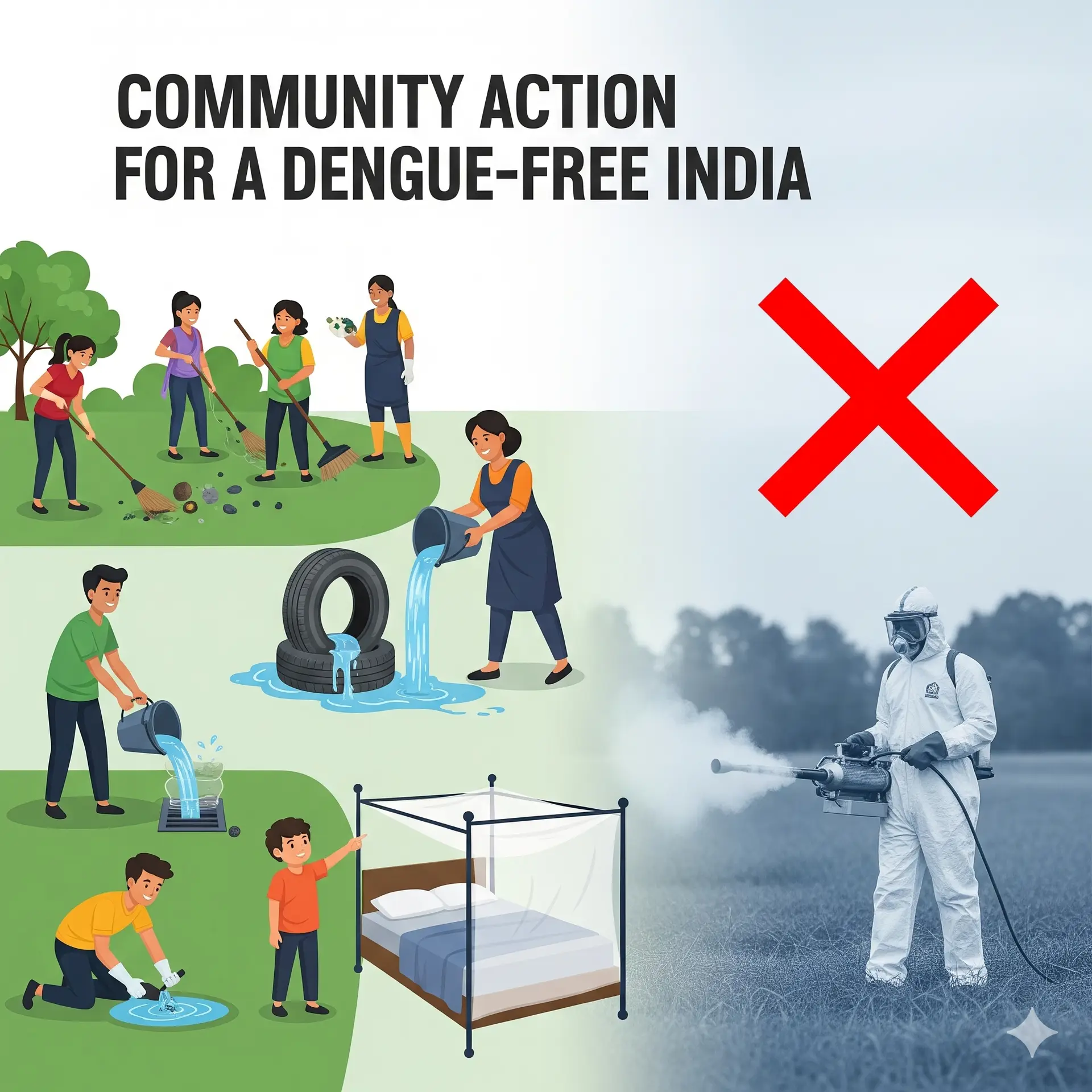
India is grappling with a significant and rising public health challenge from vector-borne diseases like dengue, chikungunya, and Zika, all transmitted by the Aedes mosquito. Despite the growing threat, current control measures, largely reliant on traditional fumigation, are proving ineffective. A strategic overhaul is imperative, moving towards an integrated, proactive, and community-centric approach.
The Growing Burden of Aedes-Borne Diseases 🦟
The Aedes mosquito is responsible for transmitting several severe arboviruses, creating a substantial health and economic burden in India.
-
Dengue: India has one of the world’s highest dengue burdens, with an estimated 33 million symptomatic cases annually. It is both an endemic and an emerging threat across the country.
-
Chikungunya: This endemic viral disease, causing debilitating joint pain, has seen recurrent major outbreaks and now affects nearly all states, particularly urban and peri-urban areas.
-
Zika: First reported in 2016, Zika cases have since emerged in multiple states, posing a significant risk, especially due to its link with birth defects.
Why Current Control Measures are Failing
The limited success of India’s fight against the Aedes mosquito can be attributed to several key factors:
-
Flawed Fogging-Centric Approach: The primary strategy of outdoor fogging (fumigation) is fundamentally mismatched with the mosquito’s behavior. Aedes mosquitoes are primarily daytime biters that rest indoors, making outdoor fogging largely ineffective and providing no long-term solution.
-
Growing Chemical Resistance: Widespread and prolonged use of chemicals has led to mosquitoes developing resistance to common pyrethroid-based insecticides and temephos larvicides, rendering them less effective.
-
Systemic and Financial Gaps:
-
High Cost of Innovation: Promising and scientifically-backed technologies, such as the use of Wolbachia-infected mosquitoes, remain underutilized due to high initial costs and a lack of institutional support for scaling them up.
-
Incomplete Vaccine Shield: While trials for a dengue vaccine (DengiAll) are underway, there is currently no approved and effective vaccine for chikungunya or Zika available in India.
-
Way Forward: A Multi-Pronged Strategy for Effective Control
A comprehensive and sustainable strategy must be adopted, focusing on prevention and community engagement rather than reactive measures.
1. Paradigm Shift to Source Reduction The focus must urgently shift from killing adult mosquitoes to eliminating their breeding grounds.
-
Action: Prioritize Larval Source Management by targeting stagnant water in household containers, coolers, tires, and construction sites.
-
Best Practice: Replicate and scale successful campaigns like Delhi’s “10 Hafte, 10 Baje, 10 Minute” program nationwide to institutionalize weekly household inspections.
2. Strengthening Community Participation (Jan Bhagidari) 🤝 Citizen involvement is the cornerstone of effective vector control.
-
Action: Launch a mission-mode campaign like a “Dengue Free India Mission,” similar to the Polio eradication drive, using school curricula, mass media, and digital outreach.
-
Empowering Frontline Workers: Utilize the network of Accredited Social Health Activists (ASHAs) for door-to-door education and community mobilization at the ward and village levels.
-
Global Example: Learn from initiatives like the Camino Verde trial in Latin America, which demonstrated a significant reduction in dengue through evidence-based community management of breeding sites.
3. Promoting Personal Protection and Affordability Empowering individuals to protect themselves is a crucial first line of defense.
-
Action: Promote the widespread use of the most effective repellents, such as those based on DEET.
-
Accessibility: Make repellents affordable and accessible by including them under the Jan Aushadhi Scheme or providing subsidies.
-
Awareness: Launch campaigns to educate the public about the daytime biting habit of Aedes and encourage the use of long-sleeved clothing and insecticide-treated nets for daytime sleepers.
4. Integrating Innovative and Scientific Interventions 🔬 India must invest in and adopt modern, evidence-based solutions.
-
Action: Support and scale up the deployment of Wolbachia-infected mosquitoes, a proven method to reduce viral transmission, as successfully done in countries like Brazil and Indonesia.
-
Research & Development: Fast-track the development and cautious deployment of effective vaccines for dengue, chikungunya, and Zika.
5. Inter-Sectoral Convergence Vector control cannot be the sole responsibility of the health ministry.
-
Action: Integrate anti-dengue drives with national programs like the Swachh Bharat Mission for robust solid waste management (especially plastic waste) and the Smart Cities Mission for improved urban planning and sanitation. This will help eliminate artificial breeding grounds for mosquitoes.
UPSC Civil Services Examination, Previous Year Questions (PYQs)
Prelims
Q. Wolbachia method is sometimes talked about with reference to which one of the following? (2023)
a) Controlling the viral diseases spread by mosquitoes
b) Converting crop residues into packing material
c) Producing biodegradable plastics
d) Producing biochar from thermochemical conversion of biomass
Ans: (a)
Q. Which one of the following is used in preparing a natural mosquito repellent? (2021)
a) Congress grass
b) Elephant grass
c) Lemongrass
d) Nut grass
Ans: c