
Introduction
Recent political instability in Nepal, driven by deep-rooted issues of governance, corruption, and unemployment, is a microcosm of the broader fragility gripping India’s neighbourhood. Such turmoil is not a localized affair; it has significant spillover effects that directly impact India’s core strategic, security, and economic interests. This situation critically tests the resilience and adaptability of India’s ‘Neighbourhood First’ policy, demanding a proactive and multi-faceted engagement to safeguard regional stability and secure its national interests.
The Special and Enduring Nature of India-Nepal Relations
India’s relationship with Nepal is unique and foundational to its foreign policy, built upon the following pillars:
-
Deep Civilisational and Cultural Ties: The connection, often described as “Roti-Beti Ka Rishta” (kinship over bread and marriage), is rooted in shared mythology (Ramayana), common spiritual heritage (Buddhism), and intertwined history (shared anti-colonial and pro-democracy struggles).
-
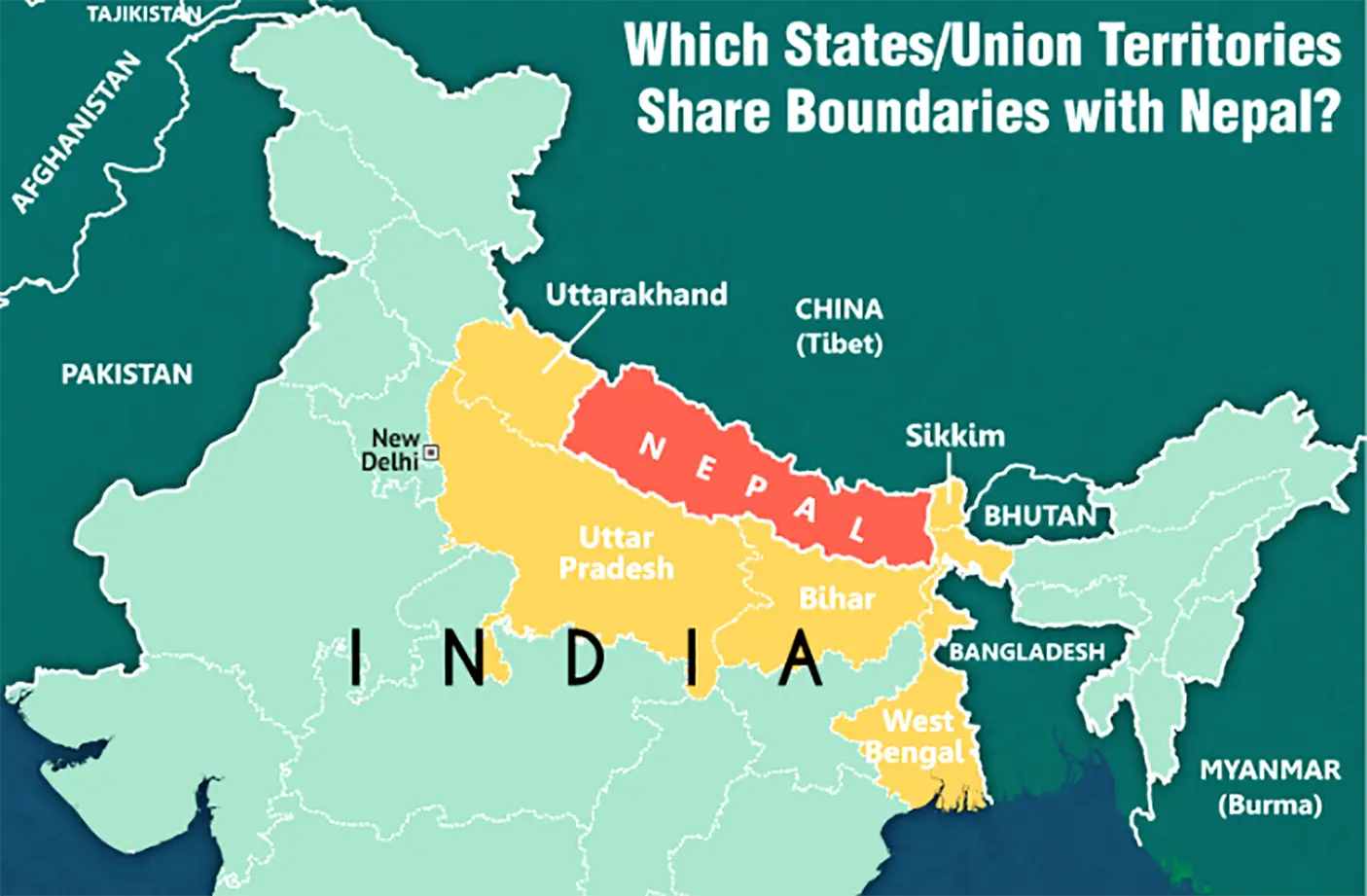
Open Border: The 1,850 km long open border facilitates seamless movement of people and goods, fostering unparalleled people-to-people connections.
-
Strategic Framework: The 1950 Treaty of Peace and Friendship established a framework of national treatment for each other’s citizens, creating a unique architecture of economic and social integration.
-
Military Cooperation: The recruitment of Gurkha soldiers into the Indian Army since the 1816 Treaty of Sugauli represents an institutionalized bond of trust and shared security interests, further cemented by joint military exercises like ‘Surya Kiran’.
Impact of Nepal’s Political Instability on India’s Interests
Political volatility in Nepal creates a strategic vacuum, posing direct and indirect challenges to India:
-
Security Concerns: An unstable Nepal can become a safe haven for anti-India elements. The porous border could be exploited for insurgency, cross-border crime, and the smuggling of arms and counterfeit currency, posing a direct threat to India’s internal security.
-
Economic Disruption and Strategic Ceding of Space: As Nepal’s largest trading partner, economic instability disrupts supply chains and jeopardizes Indian investments. More critically, policy paralysis in Nepal stalls crucial Indian-led infrastructure and development projects, creating a vacuum that is readily filled by China through its Belt and Road Initiative (BRI).
-
Setback to Energy and Connectivity Goals: Political gridlock can derail vital hydropower collaborations (e.g., Arun-3, Phukot Karnali), which are central to India’s vision of creating a regional energy grid and becoming a net electricity exporter.
-
Erosion of Diplomatic Leverage: Continuous instability weakens institutional cooperation, disrupts diplomatic channels, and allows extra-regional powers, notably China, to deepen their strategic inroads in a nation considered vital to India’s security architecture.
Broader Consequences of Neighbourhood Turmoil for India
The challenges emanating from Nepal are symptomatic of wider regional instability, with profound implications for India:
The Way Forward: Reinvigorating the ‘Neighbourhood First’ Policy
To effectively navigate this complex regional landscape, India must adopt a proactive, multi-pronged strategy:
-
Shift from Border Management to Border Integration: Move beyond a purely security-centric approach to developing modern Integrated Check Posts (ICPs), streamlining trade, and promoting cross-border economic zones to create shared prosperity.
-
Strengthen Regional Security Architecture: Enhance intelligence sharing, coordinate border management, and expand joint counter-terrorism exercises. India should take the lead in building a regional framework for crisis response and disaster management, reinforcing its role as a net security provider under the SAGAR (Security and Growth for All in the Region) doctrine.
-
Ensure Timely Project Delivery: Adopt a “whole-of-government” approach to fast-track the implementation of development projects. Timely delivery is crucial to counter narratives of Indian sluggishness and build tangible goodwill.
-
Deploy Economic Diplomacy as a Strategic Alternative: Position India’s development assistance—based on grants, soft loans, and capacity-building—as a transparent and sustainable alternative to China’s “debt-trap diplomacy.” Tailor assistance to the specific needs of neighbouring countries.
-
Leverage Asymmetric Soft Power: Deepen people-to-people ties by expanding educational scholarships (e.g., ITEC program), cultural exchanges, and medical tourism. India’s democratic values, pluralistic society, and cultural resonance are unique assets that must be leveraged more effectively.
Conclusion
The stability, security, and prosperity of its neighbourhood are not merely desirable but are prerequisites for India’s own national development and regional aspirations. The political churn in Nepal is a critical reminder that a reactive policy is no longer sufficient. India must pursue a reinvigorated ‘Neighbourhood First’ policy—one that is proactive, generous, and consistent. By combining robust security cooperation with accelerated development partnerships and deep cultural engagement, India can consolidate its position as the most reliable and influential partner in a volatile South Asian landscape.
UPSC previous years questions
Q. Elephant Pass, sometimes seen in the news, is mentioned in the context of the affairs of which one of the following? (2009)
(a) Bangladesh (b) India (c) Nepal (d) Sri Lanka
Ans: (d)
Q. Consider the following statements: (2020)
1.The value of Indo-Sri Lanka trade has consistently increased in the last decade.
2.“Textile and textile articles” constitute an important item of trade between India and Bangladesh.
3.In the last five years, Nepal has been the largest trading partner of India in South Asia.
Which of the statements given above is/are correct?
(a) 1 and 2 only (b) 2 only (c) 3 only (d) 1, 2 and 3
Ans: (b)