
Introduction
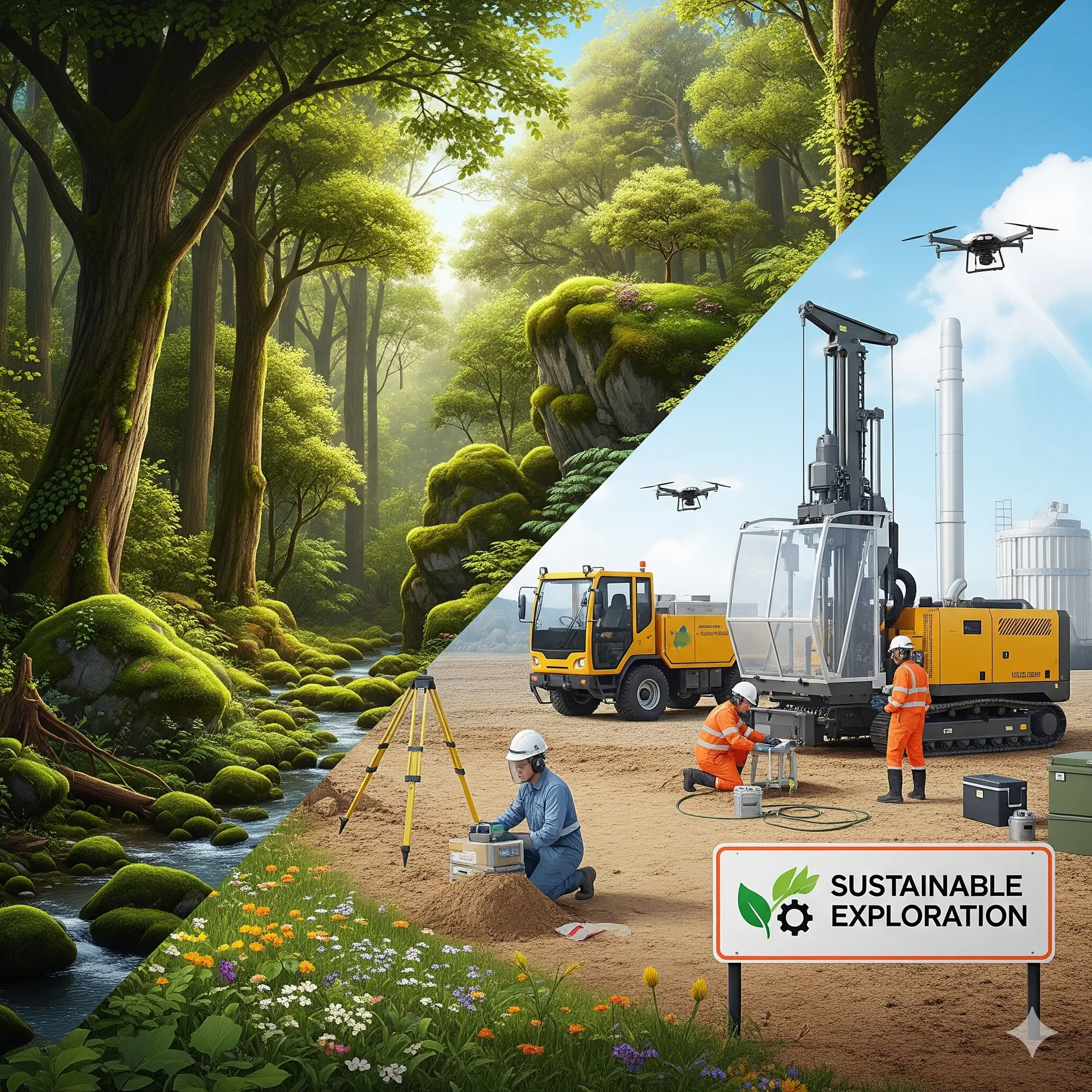
The recent approval by the Forest Advisory Committee (FAC) to enhance exemptions for mineral exploration drilling in forest areas marks a significant policy shift. This move, rooted in the Forest (Conservation) Amendment Act, 2023, aims to fast-track the search for critical minerals vital for India’s economic growth and national security. However, it also raises substantial concerns regarding its potential impact on fragile forest ecosystems and the rights of forest-dwelling communities, highlighting the classic dilemma between development and conservation.
Rationale Behind Easing Mineral Exploration Norms
The government’s decision to permit a higher density of boreholes (from 25 to 62-80 per 10 sq km) without prior forest clearance is driven by several strategic objectives:
-
Securing Critical Minerals for Self-Reliance: The primary goal is to accelerate the exploration of 30 critical minerals, including lithium, cobalt, and rare earth elements. These are indispensable for high-growth sectors like renewable energy (solar panels, EV batteries), defence technology, and electronics, aligning with the Atmanirbhar Bharat mission.
-
Promoting ‘Ease of Doing Business’: The new rules streamline the exploration process by removing the need for repeated central government clearances for temporary, non-invasive activities. This reduces project timelines and bureaucratic hurdles.
-
Encouraging Private Sector Investment: By creating a more predictable and less cumbersome regulatory environment, the government aims to attract greater private sector participation and investment in the capital-intensive mineral exploration sector.
-
Supporting Economic Growth: Minerals form the bedrock of infrastructure and manufacturing. Expediting their exploration is seen as crucial for supporting industrial growth, creating employment, and boosting overall economic development.
Concerns Associated with Increased Drilling in Forest Areas
While the rationale is economically compelling, the policy has drawn criticism for its potential adverse impacts:
-
Environmental and Ecological Degradation:
-
Cumulative Impact: A significant increase in drilling, even if non-invasive, can lead to a cumulative negative impact on forest biodiversity, soil quality, and water tables.
-
Habitat Disruption: Increased human and machine presence can disturb wildlife, affecting their habitats and migratory corridors despite safeguards.
-
Forest Loss: The policy risks a gradual degradation of forest cover, which could impact local micro-climates and precipitation patterns.
-
-
Violation of Tribal and Community Rights:
-
Conflict with FRA, 2006: The exemptions may bypass the mandatory consultation and consent processes required under the Forest Rights Act (FRA), 2006, potentially infringing upon the traditional and customary rights of local communities and tribal populations.
-
Threat to Sacred Groves: Exploration in culturally and religiously significant forest areas could lead to social conflict and the desecration of sacred sites.
-
-
Dilution of Forest Conservation Laws:
-
The Forest Conservation Act, 1980 was enacted to protect forests from non-forest activities. By reclassifying mineral exploration as a permissible activity, the amendment is seen by critics as diluting the foundational principles of the Act and weakening the scrutiny framework for forest land diversion.
-
India’s Initiatives for Critical Minerals
A Sustainable Roadmap for Mineral Exploration
To mitigate the risks while achieving strategic goals, a balanced and sustainable approach is essential:
-
Adopt Advanced, Non-Intrusive Technologies: Prioritize the use of geophysical surveys, satellite imagery, remote sensing, and AI-based mineral forecasting. Drone-based mapping should be employed to minimize physical intrusion and environmental footprint.
-
Strengthen Environmental Safeguards:
-
Implement strict Standard Operating Procedures (SOPs) that designate ‘no-go’ zones, including wetlands, critical wildlife habitats, and breeding grounds.
-
Impose temporal restrictions on drilling activities to avoid sensitive periods like wildlife nesting or breeding seasons.
-
-
Implement a ‘Cluster Mining’ Approach: Encourage cluster mining projects where multiple leases share common, eco-friendly infrastructure like conveyor systems and managed landfills. This would reduce the overall area disturbed by ancillary activities.
-
Uphold Community Rights: Ensure strict compliance with the provisions of the Forest Rights Act, 2006. The principle of Free, Prior, and Informed Consent (FPIC) from Gram Sabhas must be made non-negotiable before any exploratory activity commences in traditional forest lands.
Conclusion
India’s quest for critical minerals is a strategic imperative for its transition to a green economy and for bolstering national security. However, this pursuit must not lead to the unchecked exploitation of our invaluable forest ecosystems. The way forward lies in striking a delicate balance by leveraging cutting-edge technology for sustainable exploration, enforcing stringent environmental regulations, and ensuring that the rights and livelihoods of forest-dependent communities are respected and protected. A participatory and scientifically-informed approach is the only way to ensure that development and conservation can coexist.
UPSC Civil Services Examination Previous Year Question (PYQ)
Prelims:
Q. With reference to the management of minor minerals in India, consider the following statements: (2019)
Sand is a ‘minor mineral’ according to the prevailing law in the country
State Governments have the power to grant mining leases of minor minerals, but the powers regarding the formation of rules related to the grant of minor minerals lie with the Central Government.
State Governments have the power to frame rules to prevent illegal mining of minor minerals.
Which of the statements given above is/are correct?
(a) 1 and 3 only
(b) 2 and 3 only
(c) 3 only
(d) 1, 2 and 3
Ans: (a)
Q. What is/are the purpose/purposes of ‘District Mineral Foundations’ in India? (2016)
Promoting mineral exploration activities in mineral-rich districts
Protecting the interests of the persons affected by mining operations
Authorizing State Governments to issue licenses for mineral exploration
Select the correct answer using the code given below:
(a) 1 and 2 only
(b) 2 only
(c) 1 and 3 only
(d) 1, 2 and 3
Ans: (b)
Mains
Q. Despite India being one of the countries of Gondwanaland, its mining industry contributes much less to its Gross Domestic Product (GDP) in percentage. Discuss. (2021)
Q. “In spite of adverse environmental impact, coal mining is still inevitable for development”. Discuss. (2017)